
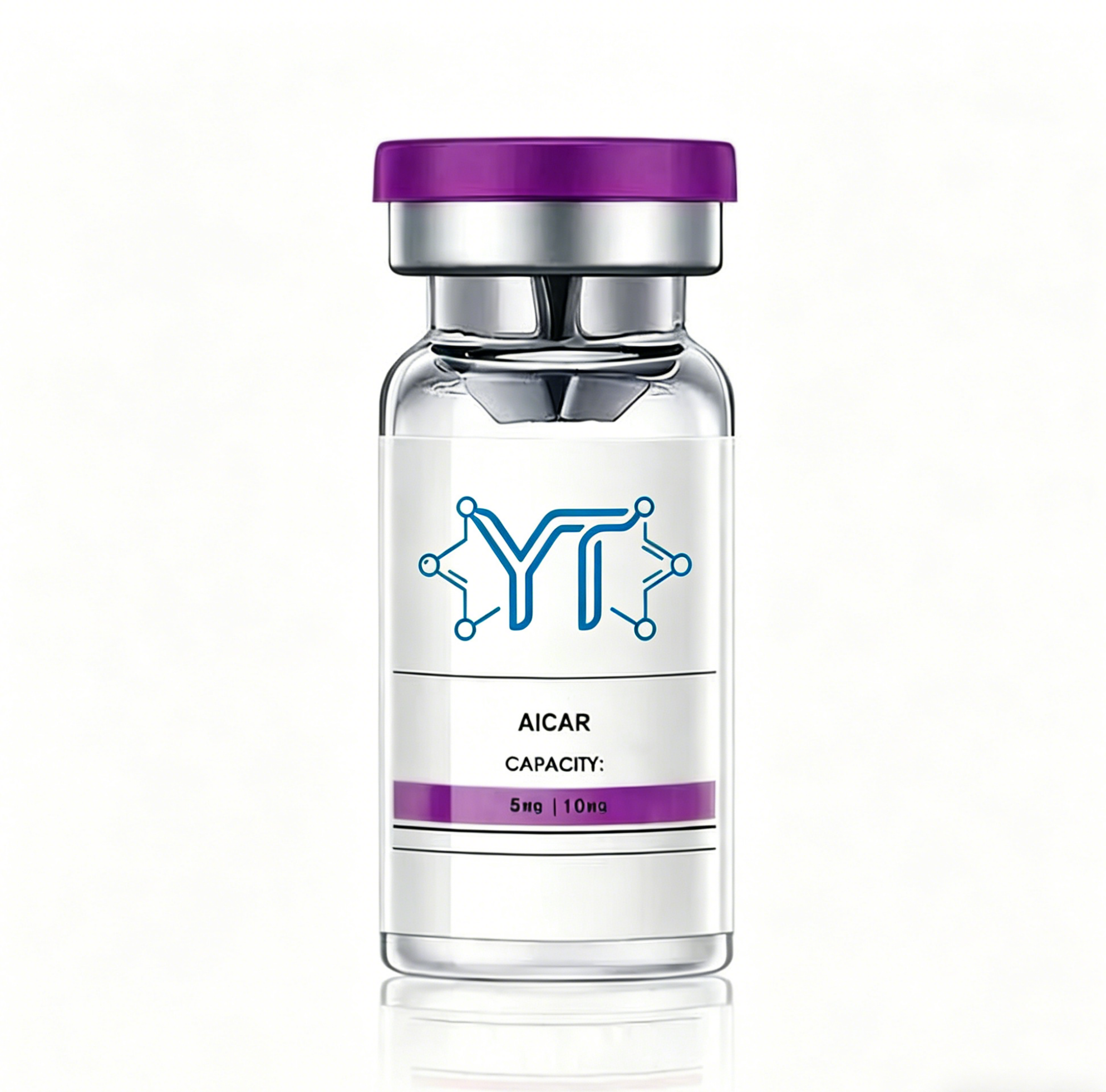
AICAR
<
>
AICAR

AICAR


Product Description

AICAR (Acadesine) is a potent AMPK activator, known as an "exercise-mimetic molecule". It has been extensively studied in the fields of metabolic regulation, cardiovascular protection, and athletic performance, but it is not approved for human therapeutic use and is a prohibited substance under anti-doping rules.
I. Basic Information
Full Name: 5‑Aminoimidazole‑4‑carboxamide 1‑¦Â‑D‑ribofuranoside
CAS Number: 2627‑69‑2
Molecular Formula: C₉H₁₄N₄O₅
Molecular Weight: 258.23
Properties: A cell-permeable adenosine analog, soluble in water and DMSO
II. Core Mechanism of Action
After entering cells, AICAR is phosphorylated to ZMP, which mimics AMP to activate AMPK (AMP‑activated protein kinase) without altering intracellular ATP/ADP/AMP levels.
  • Energy metabolic reprogramming: Activates AMPK, inhibits anabolism, promotes catabolism, and improves energy utilization efficiency.
  • Glucose uptake: Promotes insulin‑independent GLUT4 translocation in skeletal muscle, increases glucose uptake, and improves insulin sensitivity.
  • Lipid metabolism regulation: Inhibits adipogenesis, promotes lipolysis, upregulates adiponectin, and alleviates adipose tissue inflammation.
  • Cardiovascular protection: Reduces calcium overload, inhibits ROS and inflammation during ischemia‑reperfusion, and decreases myocardial infarct size.
  • Anti‑inflammation and autophagy: Inhibits pro‑inflammatory factors such as TNF‑¦Á and IL‑6, and regulates autophagy and mitophagy.
III. Major Research and Applications
  1. Metabolic Diseases (Diabetes, Obesity, Metabolic Syndrome)
    Animal studies have shown that it improves insulin resistance, lowers blood glucose, reduces hepatic gluconeogenesis, and alleviates fatty liver disease.
    Mechanism: Activates AMPK¡úGLUT4 translocation¡úincreased glucose uptake; inhibits PEPCK and FBP1¡údecreased hepatic glucose output.
  2. Cardiovascular Diseases
    Myocardial ischemic preconditioning: Reduces infarct size, ameliorates reperfusion injury, and lowers the risk of arrhythmias.
    Mechanism: Activates AMPK¡úopens ATP‑sensitive K⁺ channels¡úshortens action potential duration¡úreduced calcium overload.

icon png
¡°Strength builds the foundation, and excellent services reach all over the world.¡±

create win-win situation with customers

We have cooperated with experienced shipping forwarders for many years, they arrange the shipment. No matter by express, by air or by sea, we will track the course of the goods all the way, to make sure goods arrive at you on time and in good condition.
GET A QUOTE

Related Products

Benzyl Alcoh

Benzyl Alcoh

Benzyl Alcohol is an important aromatic alcohol widely used in medicine, daily chemicals, food, chemical industry and other fields. The following is a detailed introduction: I. Basic Information Molecular Formula: () M ...
Acetic Acid Water

Acetic Acid Water

Acetic Acid Water is an acidic solution formed by dissolving acetic acid in water. It is one of the most common weak acid systems and is widely used in food, cleaning, chemical, pharmaceutical and other fields. ...
Adipotide

Adipotide

Adipotide (also known as FTPP, Prohibitin‑TP01) is a synthetic peptide targeting apoptosis in adipose blood vessels. Its core function is to selectively cut off the blood supply to white adipose tissue and induce ad ...

BENZYL ALCOHOL

BENZYL ALCOHOL

BENZYL ALCOHOL is an important aromatic alcohol widely used in pharmaceutical, daily chemical, food and industrial fields, renowned for its strong polarity, low toxicity and good solubility. Basic Information Molecular ...
Glutathione

Glutathione

Glutathione (GSH) is the most central and abundant endogenous antioxidant and detoxifying molecule in human cells, composed of glutamic acid, cysteine, and glycine, with its core activity derived from the sulfhydryl group (-SH). I. Basic Stru ...
Insulin

Insulin

Insulin is the only peptide hormone secreted by pancreatic ¦Â-cells in the human body that directly lowers blood glucose, and it is also a core drug for the treatment of diabetes. I. Basic Structure ...

HGH 191AA

HGH 191AA

HGH 191AA (Somatropin, Recombinant Human Growth Hormone) is a single-chain polypeptide consisting of 191 amino acids with an identical amino acid sequence to the naturally secreted human growth hormone. It is currently th ...

IGF‑1 LR3

IGF‑1 LR3

IGF‑1 LR3 (Long‑Arg³‑IGF‑1) is a synthetic long‑acting insulin‑like growth factor‑1 analog. Its structural modification has significantly enhanced its biological activity and ...

Hyaluronic Acid

Hyaluronic Acid

Hyaluronic Acid (HA, also known as hyaluronan; sodium hyaluronate in medicinal applications), covering its structure, sources, physiological functions, core applications, and molecular weight classification, suitable for ...
Kisspeptin

Kisspeptin

Kisspeptin is a core neuropeptide that regulates the reproductive system and serves as the "master switch" of the hypothalamic-pituitary-gonadal (HPG) axis. It also exhibits functions such as inhibiting tumor metastasis a ...
PNC‑27

PNC‑27

PNC‑27 is a chimeric anticancer cell-penetrating peptide. Its core characteristic is the selective recognition of HDM‑2 on cancer cell membranes, rapid formation of membrane pores leading to cancer cell necrosis, with almost no damage to normal ...

Sermorelin

Sermorelin

Sermorelin is a synthetic analogue of growth hormone-releasing hormone (GHRH). Its core function is to stimulate the pituitary gland to secrete endogenous growth hormone (GH), and it was once used i ...
ARA-290

ARA-290

ARA-290 (Generic Name: cibinetide) is a synthetic linear peptide consisting of 11 amino acids, modified from the B helix structure of EPO (Erythropoietin). Its core feature is that it retains the tissue-protective, anti-i ...