
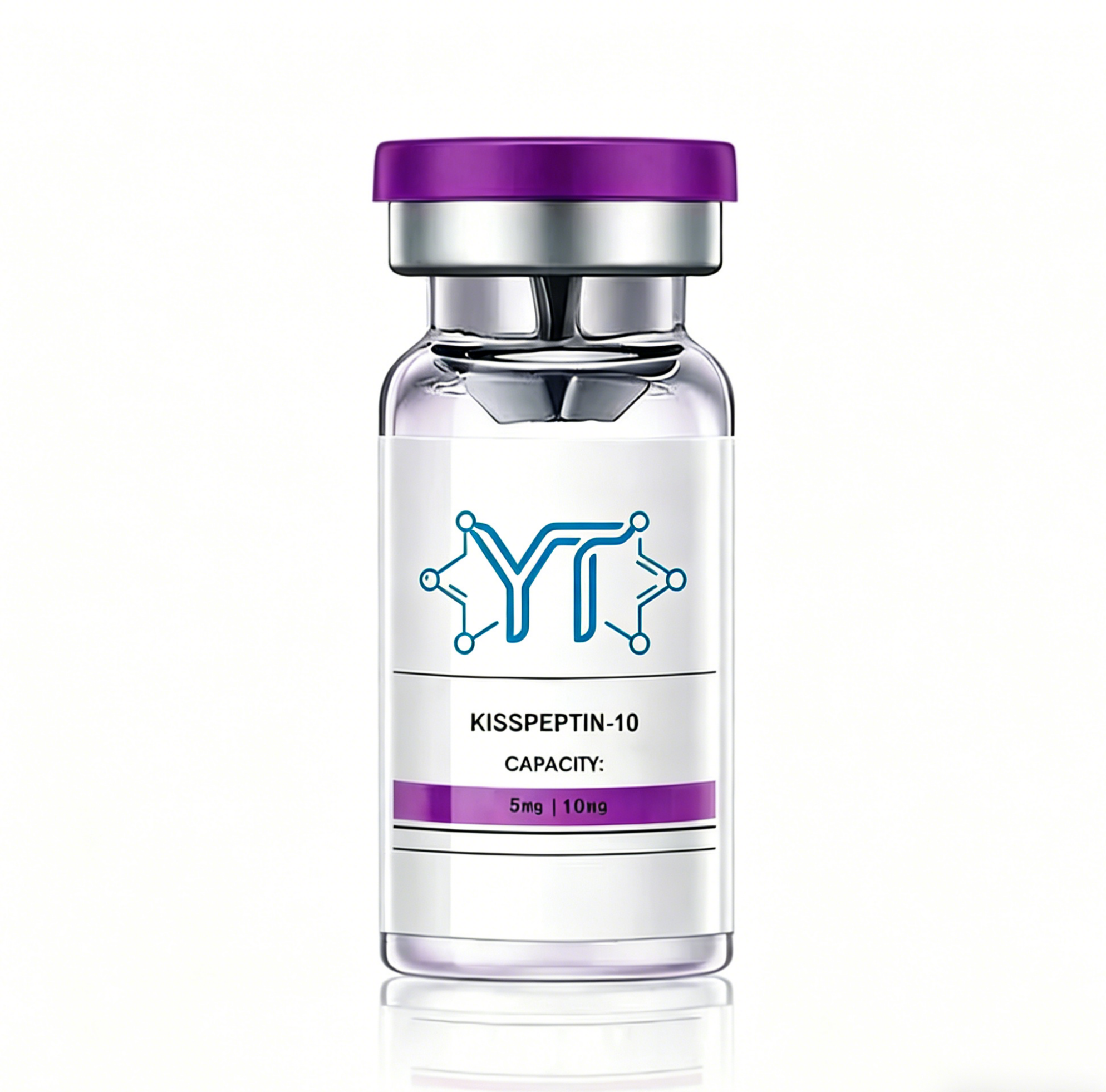
Kisspeptin
<
>
Kisspeptin

Kisspeptin


Product Description

Kisspeptin is a core neuropeptide that regulates the reproductive system and serves as the "master switch" of the hypothalamic-pituitary-gonadal (HPG) axis. It also exhibits functions such as inhibiting tumor metastasis and regulating cardiovascular and metabolic activities.

I. Basic Information

Discovery and Naming

Discovered in Hershey, Pennsylvania, USA in 1996, the gene was named KISS1 in tribute to the local Hershey's Kisses chocolate. Initially named Metastin for its ability to suppress tumor metastasis, it later became widely known as Kisspeptin due to its central role in reproductive regulation.

Gene and Structure

Encoded by the KISS1 gene (human chromosome 1q32), it is translated into a 145-amino-acid precursor, which is hydrolyzed into KP‑54 (the main active form), KP‑14, KP‑13, and KP‑10. Collectively referred to as Kisspeptin, all isoforms contain a conserved C-terminal Arg‑Phe‑NH₂, a structure essential for receptor binding.

Receptor

KISS1R (GPR54), a seven-transmembrane G protein-coupled receptor, mainly couples to Gq/11, activating the PLC→IP₃/DAG pathway to increase intracellular Ca²⁺ levels and initiate signaling cascades.

II. Core Physiological Functions

1. Reproductive Regulation (Primary Function)

  • Puberty Onset: Activation of hypothalamic Kisspeptin neurons stimulates pulsatile GnRH secretion, triggering LH/FSH release and initiating pubertal development.
  • HPG Axis Regulation: Acts directly on GnRH neurons (with >75% co-expressing KISS1R) as the most potent stimulator of GnRH secretion, driving gonadal development, ovulation, and sex hormone synthesis.
  • Menstrual/Ovulatory Regulation: Mediates positive and negative estrogen feedback to control the LH surge and ovulation. Local Kisspeptin in the ovaries and endometrium participates in follicular maturation and embryo implantation.
  • Pregnancy-Related Roles: The placenta secretes large amounts of KP‑54, which increases approximately 1,000-fold in early pregnancy and 10,000-fold in late pregnancy. It regulates trophoblast invasion and placental formation, serving as an early pregnancy marker.

2. Tumor Suppression

First identified as a metastasis suppressor, it inhibits tumor metastasis in melanoma, breast cancer, and other malignancies by suppressing cell migration and invasion.

3. Other Functions

  • Metabolism: Participates in energy balance, regulated by leptin, linking nutritional status to reproduction.
  • Cardiovascular System: Acts as a vasoconstrictor on the aorta and coronary arteries, contributing to atherosclerosis and myocardial remodeling.
  • Renal Function: Stimulates adrenal aldosterone secretion to regulate water-salt balance and blood pressure.
  • Libido: Enhances sexual desire in both males and females independently of testosterone, and is under clinical investigation for hypoactive sexual desire disorder.

III. Mechanisms of Action

Central Pathway

Hypothalamic Kisspeptin neurons → Kisspeptin release → binding to KISS1R on GnRH neurons → pulsatile GnRH release → pituitary LH/FSH secretion → gonads (ovaries/testes) → sex hormones (estrogen/progesterone/testosterone) → reproductive function.

Peripheral Pathway

Local Kisspeptin in the ovaries, placenta, adrenal glands, etc. → autocrine/paracrine signaling → regulation of follicular maturation, embryo implantation, and hormone synthesis.

IV. Clinical Applications and Research

1. Assisted Reproduction (Established Application)

  • Ovulation Induction: Replaces hCG/GnRH agonists to trigger ovulation, reducing the risk of ovarian hyperstimulation syndrome (OHSS), especially in high-risk patients.
  • IVF Optimization: Improves oocyte quality and implantation rates, used in patients with recurrent implantation failure.

2. Treatment of Reproductive Disorders

  • Idiopathic Hypogonadotropic Hypogonadism (IHH): Replacement therapy restores HPG axis function, inducing puberty and fertility.
  • Central Precocious Puberty (CPP): Kisspeptin antagonists suppress premature GnRH secretion to delay sexual development.
  • Polycystic Ovary Syndrome (PCOS): Modulates the HPG axis to improve ovulatory and hormonal disturbances.
  • Infertility/Amenorrhea: Potential therapy for hypothalamic amenorrhea and hypogonadotropic infertility.

3. Other Fields

  • Oncology: Acts as a metastasis inhibitor and tumor marker (e.g., for placental trophoblastic tumors).
  • Sexual Desire Disorders: KP‑54 increases libido in both sexes, with effective and safe clinical trial results.
  • Pregnancy Monitoring: Serum KP‑54 levels assess early pregnancy viability and predict miscarriage risk.

V. Clinical Preparations and Research

  • KP‑10 and KP‑54: Commonly used in clinical research, administered intravenously or subcutaneously. They have short half-lives, and pulsatile administration better mimics physiological conditions.
  • Long-Acting Analogs: Under development to extend duration of action and simplify dosing regimens.
  • Antagonists: Used for precocious puberty and hormone-dependent tumors (e.g., breast cancer, prostate cancer).

icon png
“Strength builds the foundation, and excellent services reach all over the world.”

create win-win situation with customers

We have cooperated with experienced shipping forwarders for many years, they arrange the shipment. No matter by express, by air or by sea, we will track the course of the goods all the way, to make sure goods arrive at you on time and in good condition.
GET A QUOTE

Related Products

Benzyl Alcoh

Benzyl Alcoh

Benzyl Alcohol is an important aromatic alcohol widely used in medicine, daily chemicals, food, chemical industry and other fields. The following is a detailed introduction: I. Basic Information Molecular Formula: () M ...
Acetic Acid Water

Acetic Acid Water

Acetic Acid Water is an acidic solution formed by dissolving acetic acid in water. It is one of the most common weak acid systems and is widely used in food, cleaning, chemical, pharmaceutical and other fields. ...
Adipotide

Adipotide

Adipotide (also known as FTPP, Prohibitin‑TP01) is a synthetic peptide targeting apoptosis in adipose blood vessels. Its core function is to selectively cut off the blood supply to white adipose tissue and induce ad ...

BENZYL ALCOHOL

BENZYL ALCOHOL

BENZYL ALCOHOL is an important aromatic alcohol widely used in pharmaceutical, daily chemical, food and industrial fields, renowned for its strong polarity, low toxicity and good solubility. Basic Information Molecular ...
Glutathione

Glutathione

Glutathione (GSH) is the most central and abundant endogenous antioxidant and detoxifying molecule in human cells, composed of glutamic acid, cysteine, and glycine, with its core activity derived from the sulfhydryl group (-SH). I. Basic Stru ...
Insulin

Insulin

Insulin is the only peptide hormone secreted by pancreatic β-cells in the human body that directly lowers blood glucose, and it is also a core drug for the treatment of diabetes. I. Basic Structure ...

HGH 191AA

HGH 191AA

HGH 191AA (Somatropin, Recombinant Human Growth Hormone) is a single-chain polypeptide consisting of 191 amino acids with an identical amino acid sequence to the naturally secreted human growth hormone. It is currently th ...

IGF‑1 LR3

IGF‑1 LR3

IGF‑1 LR3 (Long‑Arg³‑IGF‑1) is a synthetic long‑acting insulin‑like growth factor‑1 analog. Its structural modification has significantly enhanced its biological activity and ...

Hyaluronic Acid

Hyaluronic Acid

Hyaluronic Acid (HA, also known as hyaluronan; sodium hyaluronate in medicinal applications), covering its structure, sources, physiological functions, core applications, and molecular weight classification, suitable for ...

Kisspeptin

Kisspeptin

Kisspeptin is a core neuropeptide that regulates the reproductive system and serves as the "master switch" of the hypothalamic-pituitary-gonadal (HPG) axis. It also exhibits functions such as inhibiting tumor metastasis a ...
PNC‑27

PNC‑27

PNC‑27 is a chimeric anticancer cell-penetrating peptide. Its core characteristic is the selective recognition of HDM‑2 on cancer cell membranes, rapid formation of membrane pores leading to cancer cell necrosis, with almost no damage to normal ...

Sermorelin

Sermorelin

Sermorelin is a synthetic analogue of growth hormone-releasing hormone (GHRH). Its core function is to stimulate the pituitary gland to secrete endogenous growth hormone (GH), and it was once used i ...
ARA-290

ARA-290

ARA-290 (Generic Name: cibinetide) is a synthetic linear peptide consisting of 11 amino acids, modified from the B helix structure of EPO (Erythropoietin). Its core feature is that it retains the tissue-protective, anti-i ...